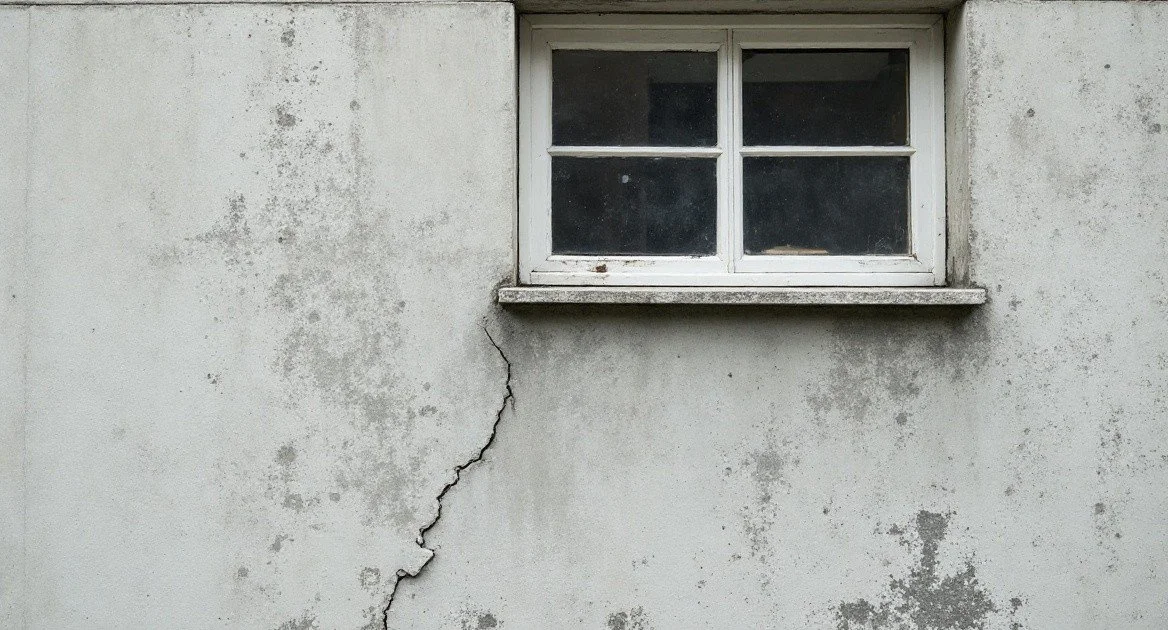
Choose foundation repair for your home if the damage is isolated to specific areas and the foundation is still intact and strong enough to support the building. Signs you need repair include diagonal wall cracks, minor foundation settlements, and misaligned windows that can’t lock properly.
Go for foundation replacement if the foundation has lost its structural integrity and can no longer support the house, even if reinforcements are added. A telltale sign is multiple large horizontal cracks in foundation walls.
Still, you need a foundation specialist to help you decide the right direction to take. Our specialist conducts detailed assessments, diagnoses root causes, and determines the best, most cost-effective option. Call (252) 648-6476 for a free consultation and get foundation repair services in North Carolina.
Summary Table of When to Repair vs Replace Your Foundation
Below is a summary table of when to repair your foundation vs when to replace it:
| Category | Option 1 | Option 2 |
|---|---|---|
| Foundation Repair / Replacement | Foundation Repair | Foundation Replacement |
| Age of Building | Less than 50 years | More than 50 years |
| Cause of Foundation Damage | Uneven shifting soil, isolated tree root intrusions, and water pooling. | Loss of structural integrity due to widespread and uneven shifts and sinks. |
| Extent of Foundation Damage | Isolated damage in specific parts of the foundation | Widespread damage to the foundation |
| Budget | As affordable as a few hundred dollars | It can cost tens of thousands of dollars to start |
| Signs of Foundation Damage | Angular or diagonal wall and floor cracks, bowing walls | Large horizontal cracks in the foundation, multiple bows |
Foundation Repair: What it Involves, Pros and Cons
Foundation repair involves applying specific methods to stabilize or reinforce an existing foundation. It targets particular problems with a building’s foundation without tearing everything down. Usually, repair is used when the foundation’s problem is related to uneven soil movement or load stress, not widespread structural failure.
Consider foundation repair if you notice the following signs:
Slight to moderate diagonal or zig-zag cracks in walls and floors
Stair-step cracks in brick
Minor foundation settlement
Misaligned doors and windows
A specialist recommends repair when the damage is isolated. As long as the foundation is largely intact and still capable of supporting the house to an extent, a repair should be sufficient. Also, it’s a less invasive and more cost-friendly option.
Therefore, for minor wall cracks, an injection with polyurethane or epoxy is enough. For minor wall bows or bulges, carbon fiber strap attachments may be sufficient. And for a house with settled foundations, helical piers straighten and restore the foundation. Sometimes, improving house drainage prevents further damage.
Pros of Foundation Repair Over Replacement
Foundation repair is a lot cheaper than a complete replacement
Repair is a less invasive option; sometimes, no excavation is necessary
It is completed faster than with some being done within a few days
It involves minimal disruption to the home and landscaping
It preserves the existing foundation structure
Cons of Foundation Repair
Repair doesn’t work for widespread foundation failure
It may require more repairs in the future if the underlying cause is not fixed
Foundation Replacement: What it Involves, Pros and Cons
Foundation replacement involves removing all or part of an existing foundation and building a new foundation from scratch. The house is lifted with hydraulic jacks and supported mid-air by cribbing. The existing foundation is then torn down, and a new concrete foundation is poured. Finally, the house is lowered back onto the new foundation.
Foundation replacement is a last resort when the foundation has widespread failure or significant structural instability that cannot be repaired. If the foundation can no longer support the building even with reinforcement, then replacement may be the option.
A specialist may recommend foundation replacement if your building has:
Large and horizontal cracks in multiple sections of the foundation
Multiple foundation sinking areas
Bowing or collapsing foundation beyond repair limits
An aging foundation older than 50 years
Undergone several foundation repairs that have failed to resolve the issue
Pros of Foundation Replacement Over Repair
Foundation replacement is a long-term 50-year+ solution
It directly addresses structural foundation problems that repairs cannot fix
It allows for drainage system upgrades
It brings an old house’s foundation up to modern standards
Cons of Foundation Replacement
Foundation replacement is a costly procedure, far more expensive than repair
It is highly invasive and can take up to months to complete
It requires a lot of disruption to the home and the surrounding property
Factors to Consider When Choosing Between Foundation Repair and Replacement
When deciding between foundation repair and replacement, consider the type of foundation damage your building has, its age, your budget, and a professional's recommendations.
Type and Extent of Foundation Problems
The type of foundation damage determines whether a repair is sufficient or complete replacement is needed. Damage confined to bowing basement walls can be repaired with carefully placed wall anchors, and a slightly settling foundation may require a slab jack. But if you have a crumbling foundation that can no longer support your house despite reinforcements, a foundation replacement becomes the only option.
Age of Foundation
Generally, foundations last from 50 to 100 years. Above that threshold, older foundations may begin to deteriorate, and repairs may not be enough to provide long-term fixes. In this case, a replacement allows for the construction of a new concrete foundation that will last another half-century.
Budget
It’s essential to consider your budget not just when deciding between replacement vs repair, but also when choosing a repair method. Some foundation repair methods are more affordable than others and still work as well. Keep in mind that while foundation replacements are a lot more expensive than repairs, they save more money in the long run and can even raise the value of your home.
Professional Recommendation
Finally, you cannot decide on your own whether to replace or repair your foundation. You need the opinion of a foundation expert with experience fixing and replacing many foundations. The specialist can professionally assess the damage, identify root causes, and recommend the best solution for your home’s foundation problems.
Our Foundation Specialist Helps You Decide Between Repair and Replacement
At Functional Foundations, our experienced foundation experts help you decide the best way to fix foundation problems. They share decades of experience assisting homeowners in restoring the structural integrity of their foundations to the required standards.
Call (252) 648-6476 for a free consultation and professional foundation wall repair in North Carolina.
FAQs
Is it cheaper to replace or repair a concrete foundation?
It is cheaper to replace a concrete foundation than to replace it. That’s because repairing a concrete foundation requires fewer materials, may not require excavations, and can be completed more quickly. In contrast, replacing a concrete foundation involves rebuilding the foundation from scratch.
How long does a foundation repair last?
A foundation repair can last for decades if done correctly. It depends on the foundation repair method.
How often does a foundation need to be replaced?
A foundation may need to be replaced once every 100 years. Foundations last from 50 to 100 years. Therefore, as long as undesirable conditions like rapidly shifting soil and tree root intrusions don’t affect it, a foundation can last for a century.