How to Repair a Sinking Crawl Space?
To repair a sinking crawl space, the process begins with a structural inspection, followed by installing crawl space support posts and jacks, reinforcing damaged floor joists, and correcting drainage and moisture issues. A sinking foundation usually develops when weak soil or excess water causes the supports to shift and sink. Proper crawl space repair restores stability and prevents further movement.
In this guide, you will learn how to fix a sinking crawl space, what causes the problem, and what homeowners can expect.
Call Functional Foundations at (252) 648-6476 if you suspect your crawl space is sinking or if you notice uneven floors or shifting supports. We use high-quality, durable materials for crawl space repair in North Carolina.
How to Repair a Sinking Crawl Space?
Repairing a sinking crawl space involves stabilizing the ground, reinforcing supports, and correcting moisture conditions. The process helps restore stability and prevent further movement.
Step 1: Professional Structural Evaluation of Your Crawl Space
At the initial visit, the contractor inspects the area for elevation changes and checks:
● Uneven or sloping floor joists
● Damaged or leaning support posts
● Condition of existing jack posts and jacks
● Soil condition beneath your crawl space
● Signs of settling or shifting
● Moisture levels and standing water
● Drainage patterns around the foundation
● Cracks along crawl space walls or supports
Step 2: Installing Crawl Space Support and Jack Posts
Once the problem areas are identified, contractors install crawl space support systems. These often include steel jack posts placed beneath dropped beams. Each post sits on a stable footing designed to carry weight safely.
Hydraulic jacks are used during installation to gently lift sagging sections back toward level. After the adjustment is complete, the crawl space jack post remains in place to permanently support the load and prevent further sinking.
Step 3: Reinforcing Floor Joists and Framing
After the crawl space support system is installed, contractors inspect the floor joists and framing for damage caused by sinking and long-term movement. During the structural assessment process, they check for cracks, splitting, sagging, and signs of wood rot that may require subfloor repair to restore load-bearing integrity and long-term stability.2 / 2
Damaged floor joists are reinforced with additional lumber or replaced if deterioration is severe. In some cases, additional crawl-space supports or a jack is added beneath weak sections to improve load distribution. Strengthening the framing ensures the space above remains level and stable after lifting is complete.
Step 4: Correcting Drainage and Moisture Problems
Moisture is one of the main reasons a crawl space begins sinking. Contractors correct exterior and interior drainage issues to prevent further soil movement. This includes improving grading around the foundation, extending downspouts, or installing drainage measures to redirect water away from the home.
We often recommend installing a crawl space encapsulation system. A crawl space vapor barrier system along the ground and walls to reduce moisture exposure. Sealing crawl space vents may also help control humidity.
Step 5: Final Stabilization Check and Ongoing Monitoring
After supports, framing, and moisture control are completed, contractors perform a final stabilization check. They confirm that jack posts are properly adjusted, supports are secure, and the crawl space is level.
Homeowners are advised to periodically monitor the space for signs of settling or moisture intrusion.
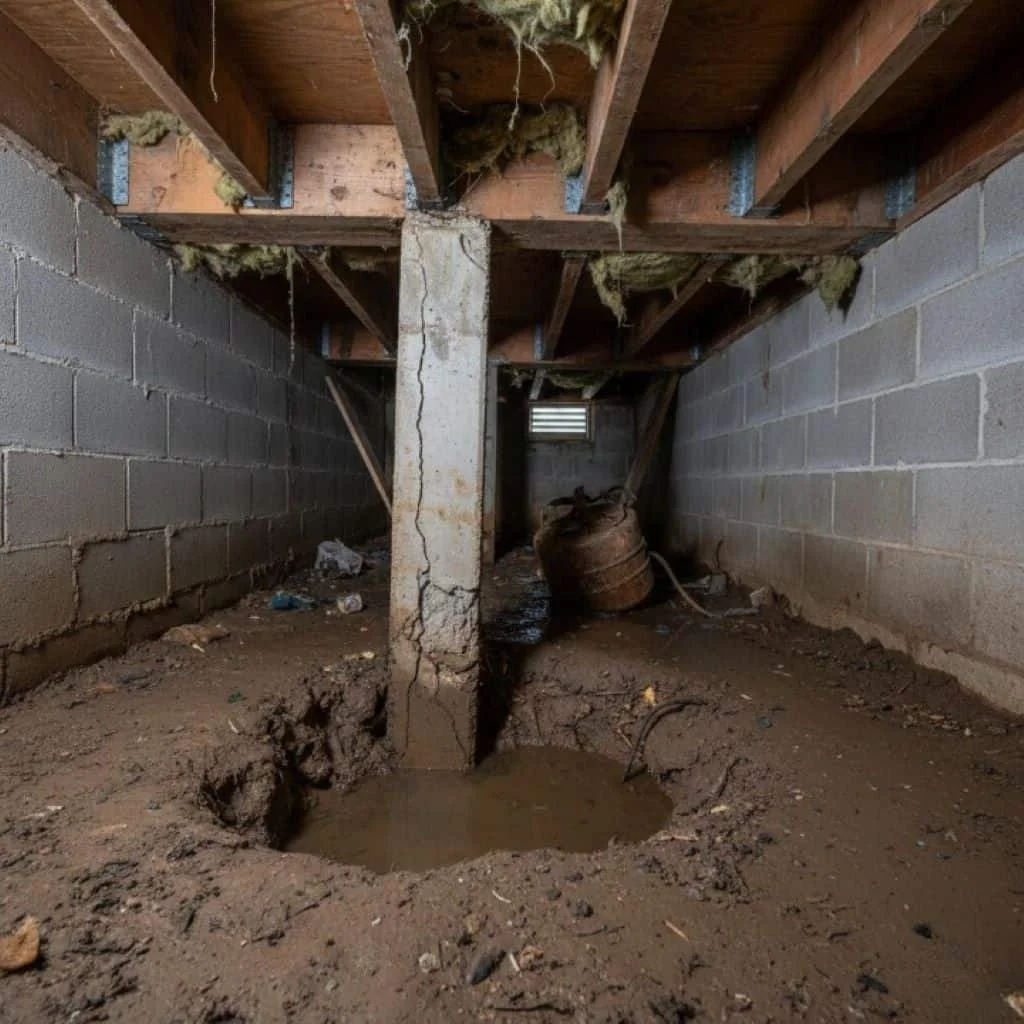
Warning Signs of a Sinking Crawl Space
A sinking crawl space often shows visible changes inside the home and beneath the floor before the problem becomes severe.
● Sloping or uneven floors
● Doors that stick or do not close properly
● Cracks in drywall, especially above door frames
● Gaps between walls and ceilings
● Bouncy or soft spots in the flooring
● Leaning or shifting support posts
● Sagging floor joists
● Standing water or damp soil in the crawl space
● Separated or tilted crawl space supports
If you notice any of these warning signs, do not wait for the damage to spread and affect the stability of your entire home.
Call (252) 648-6476 for a professional inspection.
What Causes Sinking Crawl Spaces?
Crawl spaces sink when the soil beneath the supports loses strength and can no longer support the home's weight.
● Weak or loose soil that was not properly compacted during construction
● Excess water from heavy rain, plumbing leaks, or poor drainage
● Soil shrinkage during dry seasons, especially in clay-heavy ground
● Erosion that washes soil away from beneath support points
● Inadequate footing depth that fails to reach stable ground
● Long-term settling as the home naturally adjusts to soil movement
When soil conditions change, the support posts begin to shift. Over time, the crawl space can sink, affecting floors, walls, and overall structural integrity.
How Long Does Crawl Space Repair Take?
Crawl space repair typically takes a few days to one week, depending on the size and the extent of the damage.
● Support installation only: 1–3 days to install crawl space support systems and jack posts
● Framing repairs included: Additional 1–2 days if floor joists or structural framing need reinforcement
● Moisture control or encapsulation: Several more days if drainage improvements or crawl space encapsulation are required
● Severe sinking cases: May take longer if soil conditions require extensive stabilization
After inspection, contractors provide a clear schedule based on the specific repairs required.
How Much Does It Cost to Repair a Sinking Crawl Space?
The cost to repair a sinking crawl space varies based on the extent of the problem, required materials, and the solutions needed to restore stability.
● Minor support adjustments: Lower cost when only a few crawl space jacks are added
● Full support system installation: Costs rise with the number of supports and the depth of installation
● Framing reinforcement: Extra charges if floor joists or structural framing need repair
● Moisture control work: Additional cost for drainage improvements or crawl space encapsulation
● Soil and access conditions: Hard-to-reach spaces or difficult soil can increase labor and equipment needs
Because every structure is different, an on-site evaluation is the best way to get an accurate cost estimate.
If you are dealing with a sinking crawl space and want clear pricing with no surprises, schedule a professional inspection. Give us a call at (252) 648-6476 for a free estimate.
Can You Repair a Sinking Crawl Space by Yourself?
You can make temporary adjustments yourself, but permanent repairs to a sinking crawl space usually require professional equipment and proper load planning.
Simple actions like placing a temporary jack post under a sagging beam may seem helpful, but without a stable footing and proper weight distribution, the fix may fail. Improper lifting can crack drywall, stress floor joists, or shift framing out of alignment. Uneven jack placement can also create new pressure points inside your crawl space.
Permanent crawl space repair involves evaluating soil conditions, installing engineered support systems, and correcting moisture or drainage issues. These steps require specialized tools and experience to avoid further structural damage.
If your crawl space is sinking, a professional inspection is the safest way to restore stability and prevent costly mistakes.
Tips for Preventing Future Crawl Space Settlement
You can prevent future crawl space settlement by following these tips:
● Improve drainage around the foundation to keep water from collecting near support points
● Extend downspouts away from the home to reduce soil saturation
● Keep gutters clean to prevent overflow near the crawl space
● Seal crawl space vents if the moisture is high to limit humidity buildup
● Install or maintain a crawl space encapsulation system to protect against long-term moisture exposure
● Inspect the supports and jack posts regularly for signs of shifting or settling
● Address plumbing leaks quickly to prevent soil weakening beneath the home’s foundation
Protect Your Home’s Stability Before the Damage Spreads
A sinking foundation area beneath your home can affect floors, walls, and long-term structural stability if left unaddressed. Taking action early helps prevent further movement and protects your home’s value.
Functional Foundations provides dependable foundation repair service, transparent pricing, and clear communication from inspection through completion. Call (252) 648-6476 for a free estimate and professional crawl space repair in North Carolina.
FAQs
Can problems near the crawl space door lead to structural damage?
Gaps or moisture intrusion around the door can allow water and humid air inside. Over time, this may contribute to crawl space mold and soil weakening. Sealing the door properly helps protect the area beneath your home.
Why are there holes in the soil beneath my crawl space?
Small holes or depressions in the soil can form from erosion, water flow, or soil movement. These holes may signal that the ground is losing support beneath posts or blocks.
Should crawl space vents be sealed?
They help control moisture levels when combined with proper encapsulation. It also reduces the risk of wood damage, mold growth, and soil weakening.
Does crawl space encapsulation help prevent settling?
It helps reduce moisture that weakens soil beneath support points. A sealed vapor barrier limits water intrusion and humidity buildup, which lowers the risk of soil movement. While encapsulation does not lift a sinking structure on its own, it supports long-term stability after repairs.